
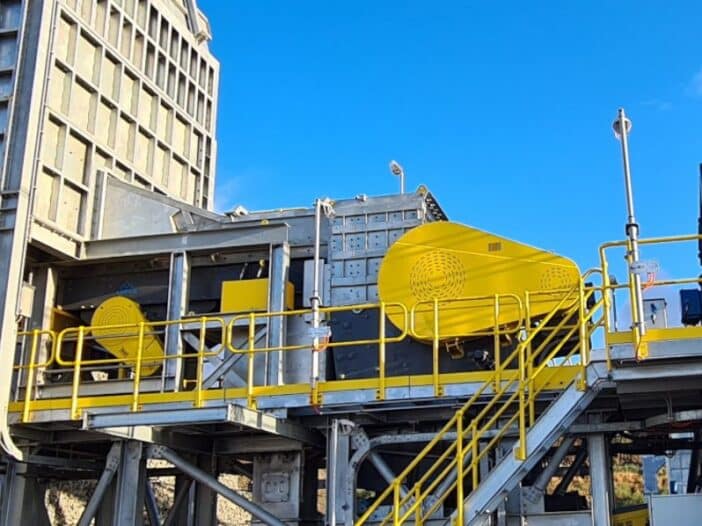
Ask a plant engineer what equipment is most likely to undermine circuit performance, and feeders rarely make the list. Crushers, screens, the primary circuit: those get the attention, the budget scrutiny, and the engineering hours. Feeders are the transition equipment. They are assumed to work.
That assumption is where the trouble starts.
A feeder that delivers material at the wrong rate, at the wrong consistency, or in the wrong condition degrades the performance of every piece of equipment downstream, often for months before anyone traces the problem back to its source. Crusher wear accelerates. Screen efficiency drops. Throughput targets slip. And because the feeder is rarely the first thing the plant engineer or operations team examines, the real cause stays hidden behind a string of maintenance calls that never quite solve the problem.
This is the first of three posts on feeder selection. This one cover why feeders get overlooked and what that costs a circuit over time. Part 2 covers the four variables that determine the right feeder type, how circuit position affects the feeder’s ability to meet operational demands, and an overview of AMPCO Minerals Feeder Equipment. Part 3 covers how to recognize a feeder problem that’s already been misdiagnosed as something else.
Feeders rarely fail dramatically. They fail quietly, by feeding too fast, too slow, or too inconsistently to let downstream equipment perform. That is what makes the selection decision consequential.
Why the Wrong Feeder Costs More Than You Think
There is a reasonable counterargument to making a big deal of feeder selection: experienced plant engineers and operations teams know their material, they have run similar circuits before, and they have a sense of what works. That intuition is real and worth tespecting.
What it tends to miss is the cumulative effect. A feeder that is undersized for surge loads does not fail the first week. It sustains micro-damage at the feed point, wears its drive components faster than planned, and gradually reduces its own capacity until throughput targets become unreachable. A feeder that cannot handle wet or sticky material does not stop working overnight. It delivers erratic flow that the crusher absorbs, the screen compensates for, and the operations team attributes to a dozen other causes before anyone looks at the feeder.
The cost is real, but it is distributed across wear parts, lost production, and troubleshooting time in a way that makes it hard to see on a single line item. That is the case for getting the selection right at the specification stage.
Inconsistent Feeding and Its Impact on Downstream Wear Rates
Feed-related circuit problems fall into two categories: overfeeding and underfeeding. Both produce the same operational symptom, a circuit that cannot hit its targets, through different mechanisms.
Overfeeding: Load Spikes and Accelerated Wear
Overfeeding occurs when material arrives at a crusher, screen, or washer faster than it is designed to handle. The load spikes. Tramp protection activates. Wear rates increase. Screen separation efficiency drops as fines overreport to the product fraction and recycle loads climb.
Underfeeding: Inefficient Operation and Uneven Segregation
Underfeeding is the opposite: feeding below the designed rate or cycling between high and low material feeding. Crushers operating below design throughput run inefficiently. Screens running below feed rate segregate material unevenly, creating localized wear zones and inconsistent product quality.
There is a consequence that is harder to see in real time: the effect of feed inconsistency on downstream wear rates. Crushers and screens are engineered for specific throughput at a specific feed rate. Operating outside expected feed rates accelerates wear beyond the planned rate. Parts cycles shorten. Maintenance intervals stop matching actual equipment conditions. The total cost of ownership rises in a way that is difficult to attribute to the original cause.
Related reading: Planned vs. Unplanned Maintenance in Mineral Processing Circuits.
Feeders fail quietly, but the variables that determine whether a feeder is right for your application are anything but subtle. Part 2 of this series covers the four material characteristics that drive feeder selection — feed size, moisture and clay content, abrasiveness, and bulk density — how circuit position affects the feeder’s ability to meet operational demands, and an overview of AMPCO Minerals Feeder Equipment.