
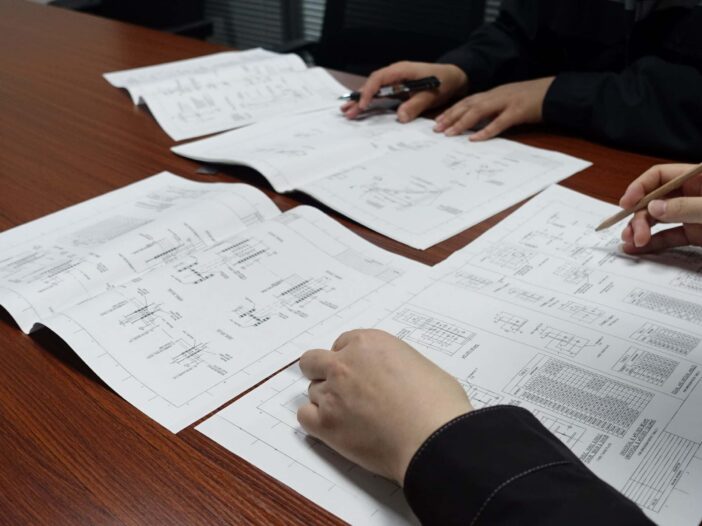
A mineral processing flowsheet is a schematic map of the process logic — showing what material goes where, in what sequence, and with what result. Operations and maintenance engineers who can read one fluently diagnose problems faster, engage engineering teams more effectively, and evaluate circuit change proposals on their technical merits.
Why Should Operations and Maintenance Engineers Be Able to Read a Flowsheet?
The flowsheet is the language of a mineral processing circuit. Every piece of equipment in a plant, every material stream between them, every process condition that determines how the circuit performs, it’s all encoded in that document.
In a surprising number of operations, the flowsheet lives in the engineering office. The people who run the plant and maintain the equipment day-to-day have varying degrees of familiarity with it. Some have never seen it. Some have seen it once during commissioning and not since.
An operations or maintenance engineer who can read a flowsheet fluently doesn’t just understand their circuit better, they make better decisions, diagnose problems faster, and engage more effectively with the engineering team when something needs to change. This post is a practical introduction.
What Is a Mineral Processing Flowsheet — and What Is It Not?
A flowsheet is a schematic representation of a process. It shows the sequence of operations in a mineral processing circuit — crushing, screening, washing, conveying — and the material streams that connect them. It is a map of the process, not a drawing of the equipment.
This distinction matters. A flowsheet doesn’t show where equipment is physically located in the plant (that’s a layout drawing) or how tall the structure is (that’s the elevation drawing). What it shows is the recommended equipment and logic of the process — what material goes where, in what sequence, under what conditions, and with what result.
Two circuits can look completely different as physical plants but have nearly identical flowsheets. Two circuits can look similar in terms of equipment but have fundamentally different flowsheets if the process logic differs.
What Are the Building Blocks of a Flowsheet?
Process Streams
Process streams are represented by lines connecting equipment symbols. Each line represents a material flow, a stream of ore, crushed material, sized product, or waste moving from one point in the circuit to the next. Arrows indicate the direction of flow.
Equipment Symbols
Equipment symbols represent crushers, screens, feeders, conveyors, washers, and other process units. The symbol shape typically reflects the equipment type, i.e., a jaw crusher looks roughly like a jaw crusher; a screen looks roughly like a screen deck. The conventions vary somewhat between engineering firms, but core symbols are consistent enough that familiarity with one flowsheet transfers to most others.
Node Points
Node points are where streams split or combine. A screen with two output decks is a split node — one feed stream becomes two product streams. A recirculating stream that returns oversize material to the crusher combines with the fresh feed stream at the crusher inlet.
Stream Labels
Stream labels — sometimes shown as boxes on the stream lines — identify material characteristics at that point in the circuit: tons per hour, particle size distribution, moisture content. On a detailed process flowsheet, these numbers tell you the designed performance condition at every point in the circuit.
What Is the Difference Between an Open Circuit and a Closed Circuit?
One of the most important concepts in a crushing and screening flowsheet is the distinction between open and closed circuits.
An open circuit passes material through a crusher or screen once. Whatever comes out the discharge end moves forward in the process, regardless of whether it meets the target size specification. Open circuits are simpler and less capital-intensive, but they offer less control over product size.
A closed circuit incorporates a recirculating loop. Material that doesn’t meet the product specification, oversize that passes over the screen deck rather than through it, is returned to the crusher for another pass. The screen acts as a classifier, and only material that meets the size specification exits the circuit as product.
For an operations engineer, understanding whether a circuit is open or closed at each stage has direct implications for how the circuit responds to changes in feed rate, feed size, and crusher settings. In a closed circuit, changes at the crusher affect the recirculating load, which in turn affects the screen, which affects the recirculating load again, a feedback loop that requires a different operating approach than an open circuit.
What Does the Flowsheet Tell You About Each Piece of Equipment?
Each piece of equipment on a flowsheet is there for a specific reason in the circuit logic. Understanding why it’s there, not just that it’s there, changes how you think about operating and maintaining it.
Primary Crusher
The primary crusher receives run-of-mine feed and reduces it to a size the downstream circuit can handle. Its position at the front of the circuit means that any change in feed characteristics — size, hardness, moisture — propagates through everything downstream. Operations teams that monitor primary crusher performance closely catch circuit-wide issues earlier.
Screens
Screens perform the classification function that defines product quality and controls recirculating loads. Screen performance — throughput, efficiency, blinding — directly determines whether the circuit produces an in-spec product.
Operation teams who understand the screening function in the flowsheet recognize quickly when screen performance is degrading, rather than discovering it when product quality fails.
Feeders
Feeders regulate material flow into each unit operation. They are often the least discussed equipment in the circuit, but their performance determines whether downstream equipment operates at its designed capacity or cycles between flood and starvation. Consistent feed rate is a prerequisite for consistent product quality at every stage.
Conveyors
Conveyors move material between process stages. On a flowsheet they appear as simple connections, but in practice their capacity, speed, and loading profile affect every unit operation they serve. A conveyor that can’t keep up with crusher output creates a bottleneck that the flowsheet doesn’t show — but the operations team feels immediately.
Why Do Recirculating Loads Deserve More Attention Than They Typically Get?
A recirculating stream — material that doesn’t meet specification and is returned to an earlier point in the circuit — is a designed feature, not a problem to be eliminated.
Closed circuits are designed to carry a certain recirculating load as part of normal operation, and that load is factored into the capacity calculations for every piece of equipment in the loop.
What isn’t factored in is an excessive recirculating load. This can result from crusher wear that opens the discharge setting, screen media blinding that reduces classification efficiency, feed characteristics that differ from design, or changes in production targets that push the circuit beyond its design envelope.
An operations engineer who understands the flowsheet recognizes early warning signs: crusher power draw trending up, screen feed rates increasing without a corresponding increase in product throughput, conveyor loads rising. Each of these indicators makes sense in the context of the circuit logic. Without that context, they’re isolated data points.
How Does Flowsheet Literacy Improve Communication With Engineering Teams and Suppliers?
Perhaps the most practical benefit of flowsheet literacy is what it enables in communication with the engineering team, with equipment suppliers, and with management.
When something in a circuit isn’t performing as expected, the ability to describe the problem in flowsheet terms, which stream, which unit operation, which stage of the circuit, dramatically accelerates diagnosis and resolution. “The crusher isn’t performing” is a starting point for a conversation.” We’re seeing elevated recirculating loads on the secondary circuit with no change in primary crusher settings” is a diagnosis.
When a supplier proposes a circuit modification or an equipment upgrade, flowsheet literacy lets operations and maintenance personnel evaluate the proposal on its merits, not just accept or reject it based on commercial factors. What does this change do to the circuit logic? How does it affect the recirculating load? What are the implications for upstream and downstream equipment?
When AMPCO Minerals engineers work with a customer on a new circuit or an expansion, the flowsheet development process is a collaborative one, designed to be understood and interrogated by the full project team, not just the engineers. A circuit that everyone understands performs better and gets fixed faster when something goes wrong.
Frequently Asked Questions
What is the difference between a flowsheet and a layout drawing?
A flowsheet shows the logic of the process, what material goes where, in what sequence, and under what conditions. A layout drawing shows the physical arrangement of equipment in the plant: where it sits in space, at what elevation, and how it is accessed.
Both documents are essential, but they answer different questions. The flowsheet is the map of the process; the layout drawing is the map of the facility.
What is a recirculating stream, and is it a sign of a problem in the circuit?
A recirculating stream is material that doesn’t meet the product size specification and is returned to an earlier point in the circuit — typically back to a crusher — for further reduction. It is a designed feature of a closed circuit, not a sign of a problem.
A recirculating load within the designed operating range is normal. An excessive recirculating load caused by crusher wear, screen blinding, or feed characteristics outside the design envelope is a warning sign that operations engineers should be able to recognize from the flowsheet context.
How does understanding the flowsheet help an operations engineer diagnose problems faster?
The flowsheet provides the circuit logic that connects performance indicators across equipment. Without it, rising crusher power draw, increasing screen feed rates, and higher conveyor loads appear as isolated data points.
With flowsheet literacy, the same indicators are recognized as the signature of an excessive recirculating load, which narrows the diagnosis immediately and points toward the root cause, whether that’s crusher wear, screen blinding, or feed change.
What is the difference between open and closed circuits in mineral processing?
An open circuit passes material through a crusher or screen once, with all output moving forward in the process regardless of size. A closed circuit incorporates a recirculating loop: material that doesn’t meet the size specification is returned to the crusher for another pass.
Closed circuits offer greater control over product size but are more capital-intensive and require a different operating approach; changes at the crusher feed into the recirculating load, which feeds back into the screen, creating a dynamic that operators need to understand to run the circuit effectively.
How do AMPCO Minerals engineers involve the operations team in flowsheet development?
At AMPCO Minerals, flowsheet development is a collaborative process, designed to be understood and interrogated by the full project team, not just the engineers. Operations and maintenance personnel are engaged during design reviews so that the circuit logic reflects the operational realities of the site. The goal is a shared understanding of the flowsheet that persists through commissioning and into the full operational life of the plant.
To learn more about how we approach circuit design from first principles, visit our Project Capabilities page.